13 Sign Astrology
A Complete Guide to Ophiuchus and the True Sidereal Zodiac

If you've ever heard there might be a 13th zodiac sign and wondered whether it's real, you're not alone. Searches for "the 13th sign" and "Ophiuchus" spike every few years, usually right after a viral news headline. Most articles you'll find will tell you to stop worrying because your sun sign hasn't changed.
This article takes a different approach. Instead of dismissing the question, it answers it directly, using the actual sky as the reference point.
By the end, you'll know what the 13th sign is, why it was left out of mainstream astrology, what it means in your birth chart, and how to verify everything with free tools you can open in your browser tonight.
What is the 13th sign of the zodiac?
The 13th sign of the zodiac is Ophiuchus, a constellation that the Sun, Moon, and planets pass through every year. It sits between Scorpio and Sagittarius along the ecliptic, which is the Sun's apparent path across the sky.
Ophiuchus is pronounced oh-fee-YOO-kus. The name comes from Greek and means "serpent-bearer." In mythology, the constellation represents Asclepius, the Greek god of healing and medicine, holding a serpent. The image is so embedded in healing tradition that the World Health Organization still uses the Rod of Asclepius as its official symbol.
True sidereal astrology, also called 13-sign astrology, includes Ophiuchus as the 13th sign because it follows the actual constellations the Sun moves through in a year. Mainstream Western astrology uses 12 signs because it follows a 12-part calendar division rather than the visible sky.
Both systems track something real. They simply track different things.
Is Ophiuchus a real zodiac sign?
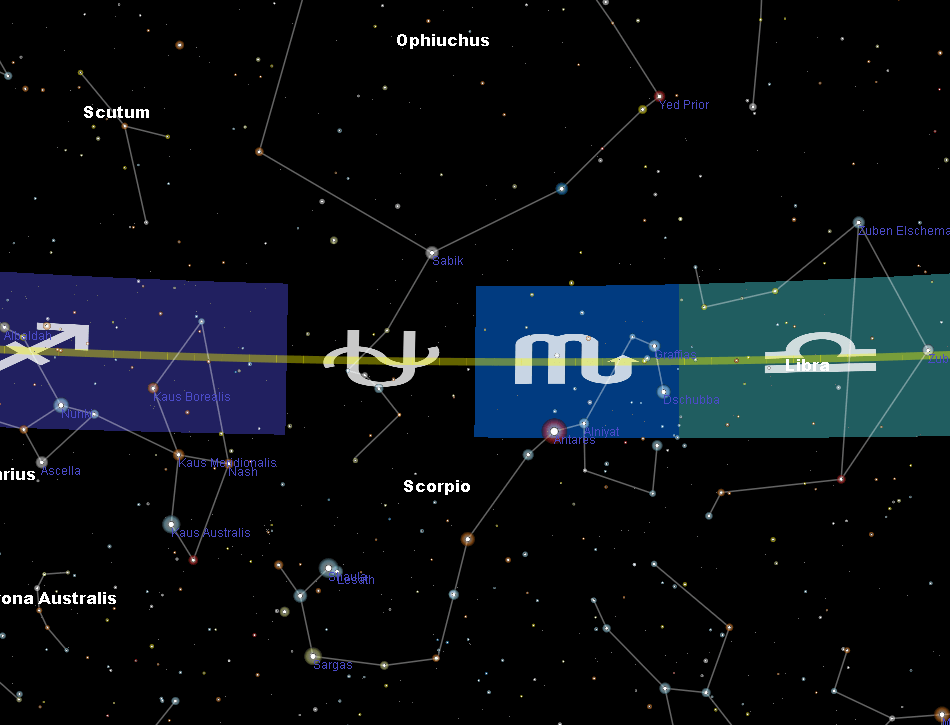
Ophiuchus is a real constellation, officially recognized by the International Astronomical Union in 1922 alongside 87 others. Whether it counts as a zodiac sign depends on which astrological system you use.
Here's what's not in dispute:
The Sun spends roughly 14 days passing through Ophiuchus every year, from December 6 to December 19 in the Midpoint true sidereal system used at Mastering the Zodiac. The Moon transits Ophiuchus once a month. Mercury, Venus, Mars, Jupiter, Saturn, Uranus, Neptune, and Pluto all cross through it on their orbits. This is verifiable with any planetarium software, including the free Stellarium app.
What's debated is whether astrologers should include it. Mainstream Western astrology uses the tropical zodiac, which divides the ecliptic into 12 equal 30-degree segments tied to the seasons. In that system, Ophiuchus has no role because the system isn't based on the visible sky.
True sidereal astrology, the system used at Mastering the Zodiac, uses the actual constellations as they appear in the sky. In that system, Ophiuchus is one of the 13 signs because it's one of the 13 constellations the Sun visibly travels through.
Both approaches are internally consistent. The disagreement is about what astrology should be measuring.
Why was Ophiuchus left out of the traditional zodiac?
Ophiuchus was left out of the traditional zodiac about 3,000 years ago when the Babylonians standardized astrology around their 12-month calendar. The number 12 was practical and symbolically important. It divides cleanly into halves, thirds, quarters, and sixths, which made calendar math easier. It also matched the 12 lunar cycles in a year and held cultural significance in many ancient societies.
To make the zodiac fit, the Babylonians divided the ecliptic into 12 equal 30-degree segments and named each one after a constellation along the path. Ophiuchus was simply not assigned a segment, even though the Sun visibly passes through it.
The constellations vary widely in size. The Sun spends about 44 days in Virgo and only about 7 days in Scorpio. To create equal segments, ancient astrologers had to ignore the actual proportions of the sky.
This was a reasonable choice for the time. Calculating exact constellation positions was difficult without modern instruments, and the seasons were a more reliable reference than precise stellar boundaries. The system worked for thousands of years and still works today as the foundation of mainstream Western astrology.
True sidereal astrology asks a different question: what if we used the actual sky? The 13-sign zodiac is the answer.
What does Ophiuchus mean in astrology?

In true sidereal astrology, Ophiuchus represents healing, transformation, and redemption. It's associated with the figure of Asclepius, the legendary healer, and with the serpent's symbolism of shedding old skins to reveal new growth.
People with strong Ophiuchus placements in their chart often have a natural ability to help others through deep emotional and spiritual healing. They tend to be drawn to medicine, therapy, holistic health, counseling, or any work that involves guiding others through change. Many also experience their own life as a continuous process of transformation.
Ophiuchus sits between Scorpio and Sagittarius and carries qualities of both. From Scorpio, it inherits depth, intensity, and a willingness to face hard truths. From Sagittarius, it borrows curiosity, optimism, and the search for meaning. The combination makes Ophiuchus a sign of metamorphosis, the stage right before the caterpillar becomes the butterfly.
Ophiuchus also shares its part of the sky with the galactic center, the rotational center of the Milky Way, which sits about two degrees from the end of the constellation. In astrological terms, the galactic center is considered an intensely transformational point. Every time a planet passes over it, there tends to be a meaningful shift, both personally and collectively.
For a deeper exploration of Ophiuchus mythology and meaning, see our full guide to Ophiuchus Mythology.
What dates does the Sun spend in Ophiuchus?
In the Midpoint Method used at Mastering the Zodiac, the Sun is in Ophiuchus from December 6 to December 19 each year. Dates on the first or last day of a sign are considered "on the cusp" and blend qualities of both adjacent signs. We recommend a three-degree buffer for cusp dates.
Here are the true sidereal date ranges for all 13 signs using the Midpoint Method:
| Midpoint Method | |
|---|---|
| Aries | Apr 21 – May 11 |
| Taurus | May 11 – Jun 18 |
| Gemini | Jun 18 – Jul 19 |
| Cancer | Jul 19 – Aug 6 |
| Leo | Aug 6 – Sep 15 |
| Virgo | Sep 15 – Nov 4 |
| Libra | Nov 4 – Nov 23 |
| Scorpio | Nov 23 – Dec 6 |
| Ophiuchus | Dec 6 – Dec 19 |
| Sagittarius | Dec 19 – Jan 21 |
| Capricorn | Jan 21 – Feb 15 |
| Aquarius | Feb 15 – Mar 9 |
| Pisces | Mar 9 – Apr 21 |
These dates are based on the Sun's actual position in the sky, calculated using the midpoints between adjacent constellations as sign boundaries. They're different from the dates you'd see in a typical horoscope column, which uses the tropical system and is roughly one full sign offset from the visible sky.
If your birthday falls in this range, your true sidereal Sun sign is Ophiuchus.
For exact placements based on your specific birth date, time, and location, you can use our free true sidereal chart calculator.
How is the 13-sign zodiac different from tropical astrology?
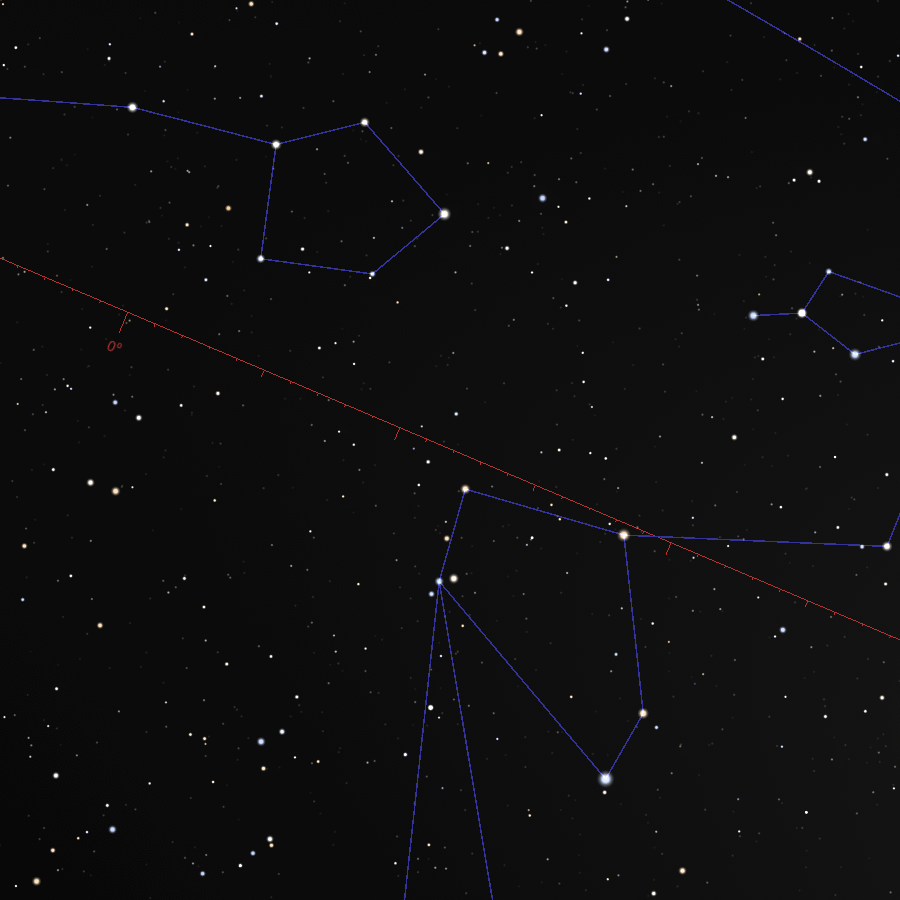
Tropical astrology uses the seasons as its reference point. The zodiac begins each year at the spring equinox, when the Sun crosses the celestial equator going north. From there, the ecliptic is divided into 12 equal 30-degree segments. The system is internally consistent and accurate for what it measures: the Sun's position relative to Earth's seasonal cycle.
True sidereal astrology uses the visible sky as its reference point. The zodiac begins where Aries is actually visible in the sky, and each sign occupies the actual size of its constellation along the ecliptic. Some signs are large, others are small. Ophiuchus is included because the Sun visibly passes through it.
The two systems drifted apart because of an astronomical phenomenon called the precession of the equinoxes. Earth's axis wobbles in a slow circle that takes about 26,000 years to complete. This causes the spring equinox point to slowly shift backward through the constellations, at a rate of roughly one degree every 72 years.
Two thousand years ago, the tropical and sidereal zodiacs aligned. The Sun was in the constellation Aries at the spring equinox, and both systems agreed. Today, the spring equinox sun appears against the constellation Pisces, and the two systems are roughly one full sign apart.
For most people, this means their tropical Sun sign and their true sidereal Sun sign are different. Someone who reads horoscopes for Taurus in tropical might find their Sun is actually in Aries when measured against the visible sky.
Both systems work for what they're designed to measure. True sidereal astrology is for people who want to work with the actual constellations as they appear tonight.
Which sidereal system does Mastering the Zodiac use?
Mastering the Zodiac uses the Midpoint Method, a true sidereal system we developed specifically for astrology.
There are several sidereal systems in use today. The most common are:
- Lahiri: The most widely used ayanamsa in Vedic astrology. Uses 30-degree equal sign divisions.
- Fagan-Bradley: The most common Western sidereal ayanamsa. Also uses 30-degree equal divisions.
- IAU: Uses the actual sizes of the constellations as defined by the International Astronomical Union for astronomy purposes.
- Midpoint Method: The system we developed at Mastering the Zodiac. Uses the actual size of the constellations like the IAU, but adjusts the boundaries to reference the ecliptic, which is the path planets actually travel.
The IAU boundaries are designed for astronomy, not astrology. They don't reference the ecliptic, which means the Sun and planets sometimes fall in astrologically incorrect signs under that system. The Midpoint Method addresses this by setting sign boundaries at the midpoints between adjacent constellations along the ecliptic itself. This produces a system that's both astronomically grounded and astrologically usable.
If you're new to sidereal astrology, you can verify the Midpoint Method against the visible sky in Stellarium. Every placement we generate corresponds to where the Sun, Moon, or planets actually appeared in the sky at your birth.
How can you verify the 13th sign yourself?
You can verify the 13th sign in about two minutes using free software. We genuinely encourage this. The whole foundation of true sidereal astrology is that you don't have to take anyone's word for it.
Here's how:
- Download Stellarium, a free open-source planetarium program. There's a web version at stellarium-web.org if you don't want to install anything.
- Set the date to your birthday at 12:00 PM noon, or to today.
- Find the Sun in the display.
- Click on the Sun and look at the constellation listed in the position info.
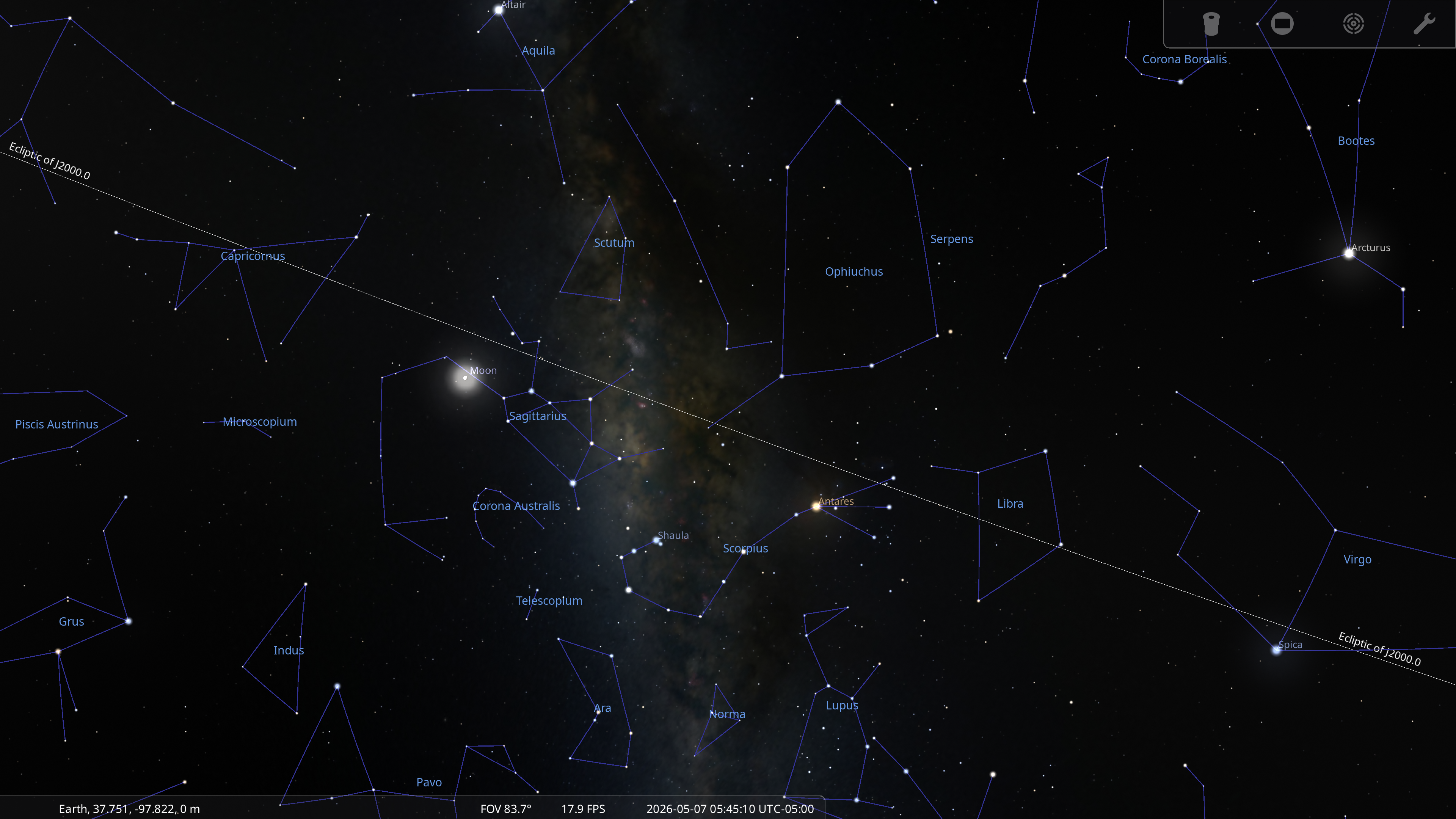
If you check your birthday and the Sun appears in Ophiuchus, that's your true sidereal Sun sign. If it appears in a different constellation than your tropical sign, that's the precession we mentioned earlier showing up in the actual sky.
You can do the same with the Moon and any planet visible at the time of your birth. This is exactly what the true sidereal chart calculator does, just automated and presented in chart form.
Stellarium is used by professional astronomers, educators, and planetariums worldwide. If you ever find a discrepancy between what we teach and what Stellarium shows, please write in. We'd want to know.
What does Ophiuchus look like in your birth chart?
Ophiuchus can appear anywhere in your chart that a tropical sign would. The Sun is just the most well-known placement. Your Moon, rising sign, Mercury, Venus, Mars, Jupiter, Saturn, and outer planets can all fall in Ophiuchus depending on your birth time and location.
A few common placements and what they tend to indicate:
Sun in Ophiuchus suggests a core identity oriented around healing, transformation, and helping others move through change. People with this placement often feel like they're always evolving, sometimes more than they'd like.
Moon in Ophiuchus points to emotional attunement around healing and renewal. These individuals tend to feel deeply, process intensely, and naturally help others work through emotional difficulty.
Mercury in Ophiuchus shapes communication around healing and transformation. These individuals often have an intuitive way with words, helping others articulate pain and find clarity through conversation.
Mars in Ophiuchus drives action toward transformation and renewal. The energy is focused on change, often catalyzing breakthroughs in their own life and in the lives of others.
Jupiter in Ophiuchus expands the themes of healing and growth. These individuals often gain wisdom through transformative experiences and tend to help others find meaning in their own changes.
Saturn in Ophiuchus brings discipline and responsibility to the healing path. People with this placement tend to approach transformation seriously, often becoming authorities in fields related to healing or personal growth.
To see all 13 signs in your own chart, run your birth date, time, and location through the free true sidereal chart calculator. You'll get your Sun, Moon, rising, and all your planetary placements in the true sidereal system.
Frequently asked questions
Did NASA discover the 13th sign?
No. NASA has stated multiple times that they didn't change the zodiac. What they did do, in a 2016 educational post for kids, was point out that the Sun passes through 13 constellations along the ecliptic, not 12. The Babylonians chose to leave Ophiuchus out 3,000 years ago to fit their 12-month calendar. The astronomy hasn't changed. Only the public conversation about it changed.
Does this mean my sun sign is wrong?
Not exactly. Your tropical sun sign is accurate within the tropical system, which measures your relationship to the seasons. Your true sidereal sun sign measures your relationship to the actual constellations. Both are real. They simply describe different things. Many people find that one resonates more strongly than the other.
What are the dates for Ophiuchus?
The Sun is in Ophiuchus from December 6 to December 19 each year using the Midpoint Method developed at Mastering the Zodiac. Other true sidereal systems may have slightly different boundaries.
Why don't most astrologers use Ophiuchus?
Most Western astrologers work in the tropical system, which is built around the seasons rather than the constellations. There's no segment for Ophiuchus in that system because the system isn't based on visible constellations to begin with. True sidereal astrologers do use Ophiuchus.
Is the 13th sign a new discovery?
No. Ancient astronomers, including Ptolemy and the Babylonians, knew about Ophiuchus. They simply chose not to include it in their 12-sign system. The constellation has been in the sky the entire time.
Is Ophiuchus the same as Scorpio?
No, but they share part of the sky. Scorpio sits below Ophiuchus along the ecliptic, and the two were sometimes lumped together in early astrological traditions. They have related but distinct meanings. Scorpio is about diving into truth and shadow. Ophiuchus is about transmuting what Scorpio uncovers into healing and renewal.
What's the symbol for Ophiuchus?
The symbol is a stylized representation of a serpent wrapped around a staff, similar to the Rod of Asclepius. The Unicode character is ⛎.
Can I calculate my full 13-sign chart for free?
Yes. The free chart calculator at Mastering the Zodiac gives you your full true sidereal chart, including Ophiuchus placements, with no signup required.
Does true sidereal astrology only matter for people born in early-to-mid December?
No. Ophiuchus is just one sign in a 13-sign system. The shift from 12 to 13 signs, plus the use of actual constellation sizes, means most people have at least one or two placements that differ from their tropical chart. Some have most of their chart shift.
Where can I learn more?
Mastering the Zodiac has free articles on each planet in Ophiuchus, the history of sidereal astrology, and a free chart calculator that shows your full true sidereal placements. For ongoing study, True Sky software lets you save charts, track transits, and compare synastry charts in the 13-sign system.
Going deeper
If this article answered your question and left you curious about more, here's where to go next.
The fastest way to see what the 13-sign zodiac means for you personally is to run your own chart. The free true sidereal chart calculator takes about 30 seconds and gives you your Sun, Moon, rising, and all planetary placements in the true sidereal system. No email required.
To understand Ophiuchus more deeply as a sign, the Ophiuchus in Astrology article goes into the energetics, mythology, and personality themes in depth. There are also dedicated pages for each planetary placement: Sun, Moon, Mercury, Venus, Mars, Jupiter, Saturn, and other planets in Ophiuchus.
If you want to keep working with the 13-sign system over time, True Sky software lets you save charts, run transits, compare synastry, and explore the system at whatever depth you want.
The 13th sign isn't a recent invention. It's been in the sky the whole time. True sidereal astrology is simply about working with what's actually there.
See your true 13-sign chart with our
free calculator
Find out where all 13 signs, including Ophiuchus, appear in your birth chart based on where the planets actually were in the sky.
Calculating planetary positions...
Taking longer than usual. Please refresh page and try again in a few minutes.
 Sun:
Your vital life force
Sun:
Your vital life force Moon:
Your inner world
Moon:
Your inner world Ascendant:
Who you are destined to become
Ascendant:
Who you are destined to become