CTSA™ Practice Exam
This is a practice exam. It works just like the real one, so you can get used to the formats and test yourself beforehand.
Work through them on your own first, then check your answers against the key at the end.
Facts
Fill in the blank.
1. What is the element of Aries?
2. What is the element and modality of Virgo?
3. Which planet rules Leo?
4. In traditional rulership, which planet rules Pisces?
5. A planet in the sign opposite its exaltation is said to be in its what?
6. In which direction are the houses numbered from the Ascendant, clockwise or counterclockwise?
7. Two planets at the same degree are in what aspect?
8. About how many years do the lunar nodes take to travel the whole zodiac?
9. About how many years does the progressed lunar cycle take?
10. Which house governs communication, siblings, and short trips?
Short answers
Answer in one or two sentences. We are looking for the right idea, not exact wording.
11. What does the planet Venus represent in a chart?
12. What does the planet Mars represent in a chart?
13. What does the planet Uranus represent in a chart?
14. What does the planet Pluto represent in a chart?
15. What does the 1st house govern?
16. What does the 6th house govern?
17. What does the 11th house govern?
18. Describe the core qualities of Aquarius.
19. Describe the core qualities of Scorpio.
20. What does a quincunx suggest between two planets?
21. Interpret the Moon in the 5th house.
22. In the lunar cycle, what does the Full Moon phase signify?
23. What is significant about the Saturn return?
24. What does it mean to say the outer planets are "generational"?
25. A client asks you to predict when they will die. How should you respond?
26. What is a Jupiter return, and what does it commonly signify in someone's life?
27. An astrologer completes their CTSA certification and stops actively studying, feeling they have reached mastery. Is this consistent with the Code of Ethics? Why or why not?
28. A client mentions they are also seeing a therapist and asks how astrology fits alongside therapy. How should the astrologer respond?
29. When a client's chart shows hard aspects, how should the astrologer frame them so the client keeps a sense of agency?
30. How should an astrologer respond if a client asks for guidance about a physical health symptom they are currently experiencing?
The chart section
Read a natal chart and a transit chart, answering the fifteen questions below for each. Answer in one or two sentences.
The natal chart questions
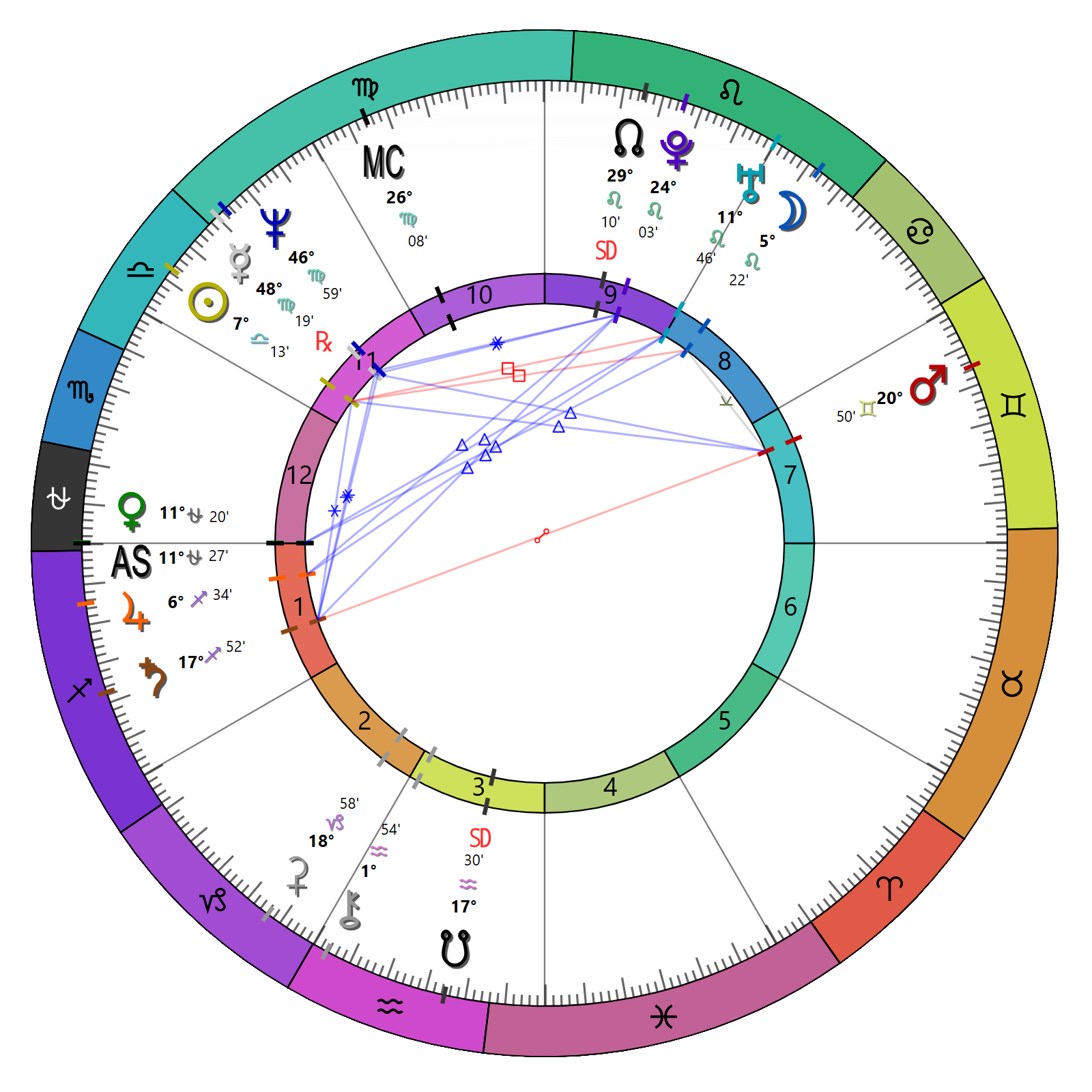
31. Identify and interpret the sign position of the Sun.
32. Identify and interpret the house position of the Sun.
33. Identify and interpret the sign position of the Moon.
34. Identify and interpret the house position of the Moon.
35. Identify and interpret the Ascendant and what life is guiding this person to develop.
36. Identify and interpret the sign position of the chart ruler.
37. Identify and interpret the house position of the chart ruler.
38. Identify and interpret the sign position of Venus.
39. Identify and interpret the house position of Mars.
40. Identify and interpret one challenging aspect (square/opposition) to the Sun or Moon.
41. Identify and interpret one supportive aspect (trine/sextile) to the Sun or Moon.
42. Identify and interpret the sign position of the 2nd-house ruler.
43. Identify and interpret the house position of the 7th-house ruler.
44. Describe what this person's career / public life is likely to be like, and why (cite the chart factors).
45. Describe what this person's home / family life is likely to be like, and why (cite the chart factors).
The transit chart questions
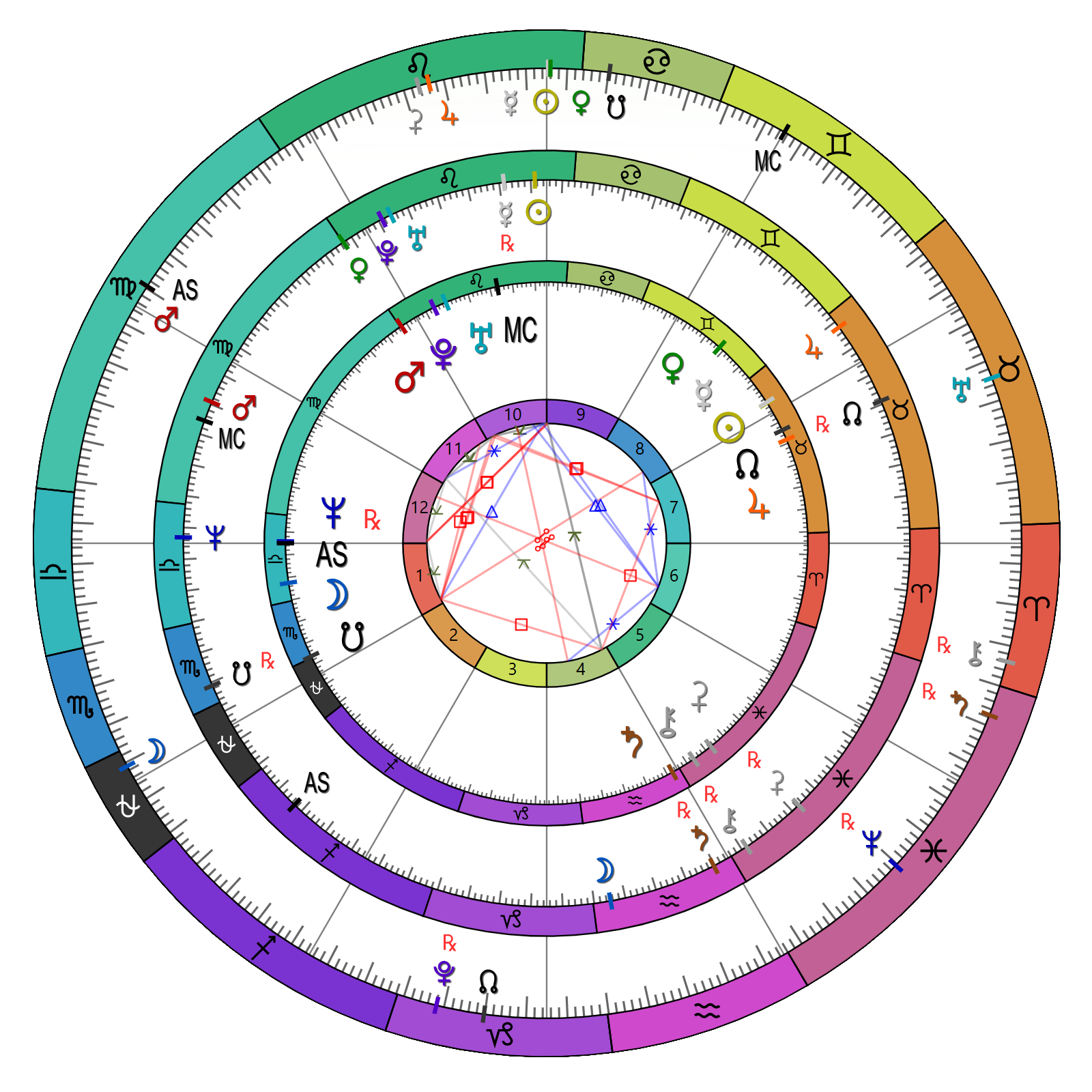
46. Identify and interpret the sign position of the progressed Sun.
47. Identify and interpret the house position of the progressed Sun.
48. Identify and interpret the sign position of the progressed Moon.
49. Identify and interpret the house position of the progressed Moon.
50. Identify the current progressed lunar phase.
51. Interpret the current progressed lunar phase.
52. Identify and interpret the house position of transiting Jupiter.
53. Identify and interpret the house position of transiting Saturn.
54. Identify where transiting Jupiter is in its cycle to natal Jupiter, nearest a return, semi-sextile, sextile, square, trine, quincunx, or opposition.
55. Identify where transiting Saturn is in its cycle to natal Saturn, nearest a return, semi-sextile, sextile, square, trine, quincunx, or opposition.

56. Identify the single most significant current transiting aspect.
57. Identify and interpret one challenging transit aspect (square/opposition) to a natal personal planet.
58. Identify and interpret one supportive transit aspect (trine/sextile) to a natal personal planet.
59. Describe what this person's career / public life is currently like, and why (cite the chart factors).
60. Describe what this person's home / family life is currently like, and why (cite the chart factors).
Answer key
Try the questions first, then check here.
1. Fire.
2. Earth and Mutable.
3. The Sun.
4. Jupiter.
5. Fall.
6. Counterclockwise.
7. A conjunction.
8. About 18 to 19 years.
9. About 29 to 30 years.
10. The 3rd house.
11. Venus is about love, values, attraction, beauty, and what a person is drawn to.
12. Mars is about drive, action, desire, and how a person goes after what they want.
13. Uranus is about freedom, sudden change, individuality, and breaking from the norm.
14. Pluto is about transformation, power, depth, and death and rebirth.
15. The 1st house covers the self, identity, appearance, and how a person comes across.
16. The 6th house covers work, daily routines, health, service, and habits.
17. The 11th house covers friends, groups, community, and hopes and goals.
18. Aquarius is progressive, inventive, humanitarian, unconventional, and visionary.
19. Scorpio is intense, deep, private, passionate, and transformative.
20. A quincunx suggests adjustment and integration between two energies that do not naturally fit, along with the growth and personal development that come from working through the discomfort.
21. Moon in the 5th ties the Moon (emotions and needs) to the 5th house (creativity, romance, children, play). For example, an emotional life expressed through creative work, romance, or raising children.
22. The Full Moon signifies culmination, peak, awareness, and results coming to light.
23. The Saturn return is a major coming-of-age. Taking on adult responsibility and restructuring one's life.
24. The outer planets are generational because they move so slowly that a whole generation shares the same sign, so that sign is collective rather than personal.
25. You should decline to predict death, explain that astrology is not used for that, and respond with care rather than alarm.
26. A Jupiter return happens about every 12 years, when transiting Jupiter comes back to its natal position. It commonly signals a chapter of growth, expansion, or new opportunity, often felt in the area of life ruled by Jupiter's natal house.
27. No. The Code of Ethics requires astrologers to keep learning and to keep their skills current. Certification is a baseline, not an end point. Ethical practice requires ongoing skill development.
28. Support the therapy and do not position astrology as a substitute. Keep mental-health questions with the therapist, and be clear that astrology offers insight, not clinical care.
29. Frame hard aspects as tendencies to work with, not fixed fate. Highlight what the aspect can build in the person over time, and honor their free will and choices.
30. Decline to diagnose, and encourage the client to see a qualified medical professional. Astrology is not a substitute for medical care.
The natal chart answers
The identify part is shown in bold. The interpret part passes as long as the right idea comes through.
31. Libra. Identity oriented around balance, harmony, fairness, and relating.
32. 11th house. Identity expressed through friends, groups, community, and future-oriented causes.
33. Leo. Emotional needs for warmth, creativity, recognition, and self-expression.
34. 8th house. Emotional life around depth, intimacy, shared resources, and transformation.
35. Ophiuchus rising. Life is guiding this person to develop healing, regeneration, and transmutation.
36. Mars in Gemini (chart ruler of Ophiuchus). Ophiuchus energy expressed through Gemini's mental, versatile, communicative qualities. Pluto or Chiron are also accepted as alternate chart rulers.
37. 7th house. Chart ruler in the 7th means the person's core direction plays out through partnerships and one-on-one relationships. Pluto or Chiron are also accepted as alternate chart rulers.
38. Venus in Ophiuchus. Love and values connected to healing, regeneration, and transmutation.
39. 7th house. Mars in the 7th brings drive, action, and assertion to partnerships.
40. Sun square Moon. Tension between the conscious identity (Sun) and the emotional needs (Moon).
41. Sun sextile Saturn or Moon trine Venus. Sun sextile Saturn: identity supported by structure and discipline. Moon trine Venus: emotions and values flow together with ease.
42. Jupiter or Saturn in Sagittarius (2nd-house rulers), or Venus in Ophiuchus (Venus as natural ruler of the 2nd). Earnings and self-worth take on expansive, philosophical qualities (Sagittarius) or a healing, transmutative flavor (Venus in Ophiuchus).
43. Venus in the 12th (natural ruler and ruler of the 7th), or Mercury in the 11th (ruler of Gemini on the 7th cusp). Partnerships play out through inner or hidden channels (12th), or through community and groups (11th).
44. Virgo in the 10th. Career and public life take on Virgo qualities: analytical, precise, service-oriented, refining, practical.
45. Pisces in the 4th. Home and family life take on Pisces qualities: imaginative, compassionate, dreamy, intuitive, spiritual.
The transit chart answers
46. Progressed Sun in Leo. Current life focus is creative, self-expressive, and warm; a phase of shining.
47. 10th house. The current focus is on career, public role, and direction.
48. Progressed Moon in Aquarius. Current emotional tone is inventive, humanitarian, unconventional, and visionary.
49. 4th house. Current emotional focus is on home, family, and inner foundations.
50. Full Moon.
51. Full Moon: culmination, awareness, results, high point. New directions emerging from what has been built.
52. 10th house. Transiting Jupiter in the 10th activates career and public life with expansion and opportunity.
53. 6th house. Transiting Saturn in the 6th tests, structures, and matures daily work, routines, and health.
54. Square or Sextile.
55. Semi-sextile or Sextile.
56. Uranus opposite Moon.
57. Uranus opposite Moon (or Saturn square Venus, or Jupiter square Moon). Uranus opposite Moon: sudden emotional change. Saturn square Venus: tension in values or relationships demanding maturation. Jupiter square Moon: over-expansion in emotional life.
58. Saturn trine Moon (or Jupiter trine Moon). Saturn trine Moon: emotional life supported by structure and dependability. Jupiter trine Moon: emotional life enriched by growth and optimism.
59. Jupiter in the 10th activates career and public life with expansion and opportunity. Ceres in the 10th may also be cited, and Jupiter trine Saturn is another valid factor since Saturn naturally rules the 10th.
60. Progressed Moon in the 4th brings the current emotional focus to home and family. Any of the transit aspects to the Moon named above (Uranus opposite, Saturn or Jupiter trine) also color this area.